

The Silent Cost of Scaling Web Scraping
Every VP of Engineering knows this story. Web scraping enters the org as a harmless $49/mo line item on somebody's corporate card. Eighteen months later it's a five-figure enterprise contract with a rigid annual minimum spend, a dedicated account manager, and a procurement thread nobody wants to open. The technology works. The economics quietly rotted.
That's exactly the moment teams start comparing the 5 best Oxylabs alternatives in 2026 — not because Oxylabs is a bad platform, but because its pricing model is engineered for enterprise procurement, not for infrastructure ROI. And once you start comparing, the real question isn't "who has more IPs?" It's "which alternative actually lowers my total cost per successful request?"
Oxylabs itself is a genuine tier-one benchmark: 175M+ residential IPs across 195 countries, SOC 2 and ISO 27001 compliance, and a mature scraper API suite (Firecrawl). If you need enterprise compliance checkboxes and a massive proxy pool today, it delivers. That's precisely why it's the standard every alternative on this list gets measured against. But when you're scaling SERP scraping specifically, you're not just paying for successful requests. You're paying for:
Expiring monthly credits you never used.
Developer hours spent unwrapping deeply nested JSON envelopes.
Extra SKUs for AI-driven parsing you assumed was included.
So before we rank the 5 best Oxylabs alternatives, this guide gives you the scoring lens: we break scraping cost into two buckets — infrastructure cost (what you pay the vendor) and developer maintenance cost (what your engineers pay in hours) — and use that framework to judge which alternative wins for your workload.
The Hidden Economics of Oxylabs: Why Teams Overpay
The Expiry Trap
Oxylabs' plan allowances are largely "use-it-or-lose-it." Your monthly quota resets whether or not you consumed it. That sounds trivial until you model seasonal traffic. A retail-intelligence team scraping SERPs might spike 4x in Q4 and idle through summer. To cover the peak, you provision for the peak — and then eat the waste every quiet month. You're effectively pre-paying for capacity you incinerate on the first of every billing cycle.
The "Parsing Tax" (OxyCopilot)
Oxylabs bundles AI-assisted extraction into separate offerings — the AI Studio and OxyCopilot-style tooling (Firecrawl). For a raw-HTML pipeline, that's fine. For a modern LLM-driven application that needs clean, schema-shaped JSON, structured extraction becomes an additional line item. You're paying twice: once to fetch the page, again to make the payload usable.
Integration Overhead
Oxylabs leans on HTTP basic auth, JSON job bodies, and deeply nested result envelopes — the classic results[0].content unwrapping dance. Independent comparisons note that Oxylabs "expects authentication details, a JSON request body, and a choice of source and rendering options before a query runs" (Crawlbase). Every one of those nested layers is billed developer time — engineers writing glue code to unwrap data instead of shipping features. That's maintenance cost, and it never shows up on the invoice.
The Summary Cost & ROI Comparison Table
Here's an at-a-glance matrix of estimated monthly SERP costs across the five alternatives at key volume milestones. Figures are directional estimates for standard Google SERP requests and will vary with rendering options and target difficulty.
| Provider | 10k SERPs/mo | 50k SERPs/mo | 1M SERPs/mo | Credit Expiry Rule | Built-In AI Parsing? |
|---|---|---|---|---|---|
| DataBlue | ~$29 | ~$99 | ~$1,200 | No expiry — top-ups roll over | ✅ Native, zero extra SKU |
| DataForSEO | ~$30 | ~$120 | ~$1,000 | Prepaid balance, no monthly reset | ⚠️ Limited / raw payloads |
| ValueSERP | ~$25 | ~$100 | ~$1,100 | Monthly plan, resets | ❌ None |
| SerpApi | ~$75 | ~$275 | Enterprise quote | Monthly — unused credits vanish | ✅ Good parsing |
| ScraperAPI | ~$49+ | ~$149+ | Spikes fast | Monthly plan, resets | ⚠️ Credit-multiplier on SERP |
Strategic note: the column that quietly wins the ROI argument is Credit Expiry Rule. Providers with strict monthly resets force you to over-provision. DataBlue's no-expiry top-ups keep baseline plans lean because overflow never evaporates — you buy once and burn it whenever demand actually arrives.
The 5 Best Oxylabs Alternatives (Cost & ROI Breakdown)
1. DataBlue: The Zero-Waste, Developer-First Winner
Core value proposition: focused, high-performance Google SERP scraping without the enterprise bloat.
DataBlue's entire design philosophy is eliminating the two costs Oxylabs quietly imposes — wasted credits and wasted engineering hours.
The ROI mechanics:
- No-expiry top-up credits. Buy overflow capacity and it rolls over indefinitely. If your search volume drops for two months, you don't lose a single dollar. There's no annual "true-up" penalty and no reset cliff.
- Zero-cost AI extraction. Schema-guided extraction and MCP server compatibility are bundled natively. No separate parsing SKU, no OxyCopilot-style upcharge, no second LLM pass to shape the data.
- Zero integration overhead. DataBlue swaps basic-auth plumbing for a single Bearer token and typed SDKs that return parsed, top-level JSON out of the box — no
results[0].contentunwrapping.
Best for: teams that want predictable, low-infrastructure costs and LLM-ready SERP data without paying for a massive residential proxy network they'll never fully use. Explore DataBlue →
2. DataForSEO: The Ultra-Cheap, High-Dev-Hour Engine
Core value proposition: a massive, task-based queue system that is incredibly cheap on a raw cost-per-request basis.
The ROI mechanics: for enormous, asynchronous, fire-and-forget queue jobs, DataForSEO's per-request pricing is hard to beat. If you're pushing millions of tasks and can tolerate latency, the infrastructure savings are real.
The hidden cost — the "dev-hour tax": implementation is genuinely complex. Your engineers write the queuing, polling, callback handling, and retry logic themselves. The cheap per-request number hides a fat maintenance bill in the developer-cost column.
ROI verdict: high infrastructure savings, but only if you have dedicated data engineers to build and babysit the pipeline. For lean teams, the labor cost erases the per-request advantage.
3. ValueSERP: The Budget-Friendly Legacy Option
Core value proposition: a low-cost, no-frills alternative for basic Google SERP extraction.
The ROI mechanics: dirt-cheap pricing for standard, raw payloads, with a response schema close to what most SERP pipelines already expect. Dropping it into an existing raw-JSON workflow is trivial.
The hidden cost: it lacks modern developer tooling. No built-in AI extraction engine, no modern typed SDKs, no native AI-agent connectors. Everything past "here's your JSON" is on you.
ROI verdict: excellent for legacy pipelines that already work and just need cheap raw JSON. But if you're building anything LLM-driven, you'll construct the entire orchestration layer yourself — which pushes the real cost back into engineering time.
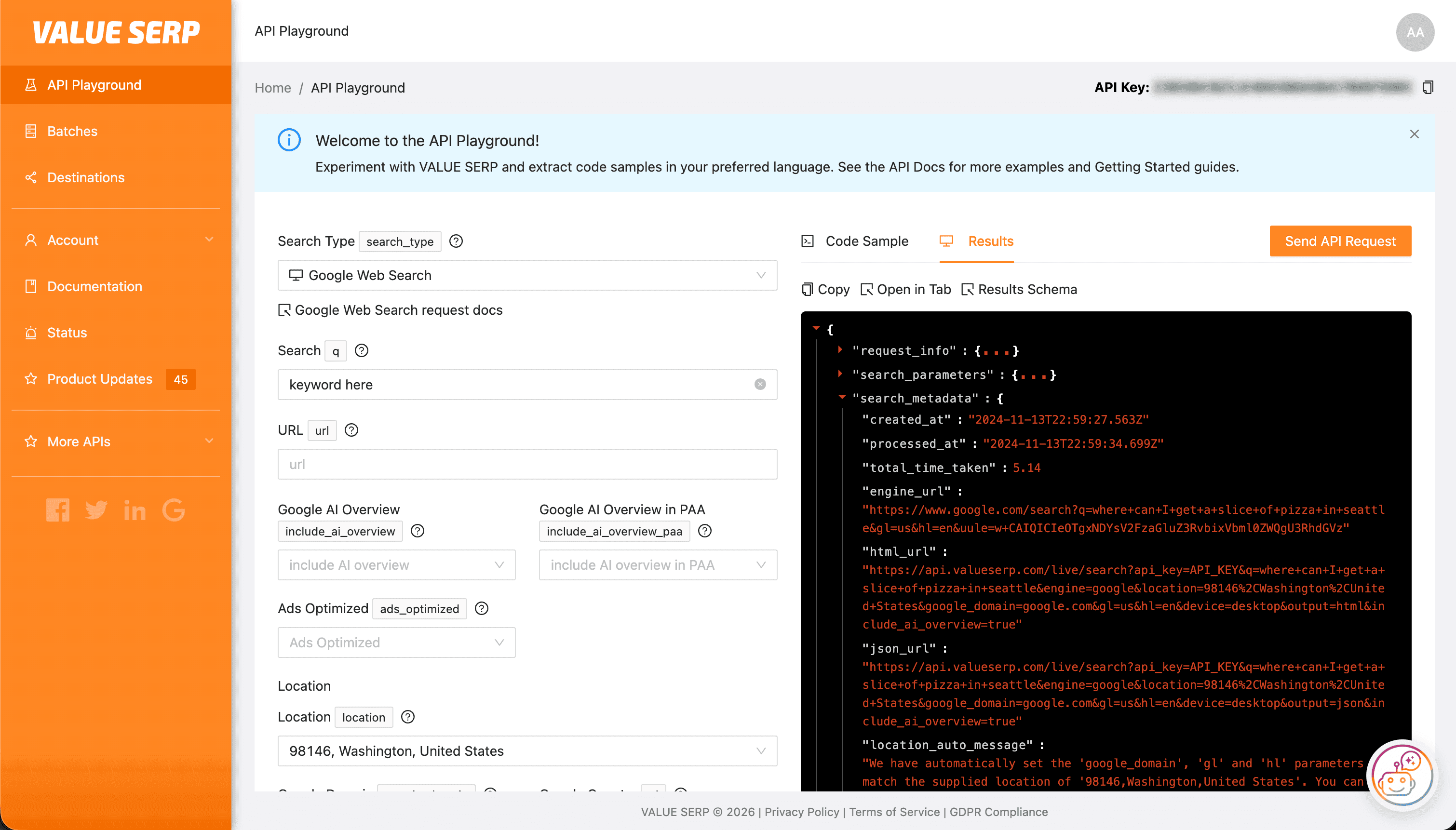
4. SerpApi: The Polished but Rigid Premium Competitor
Core value proposition: widely known for high-quality parsing and an excellent developer experience.
The ROI mechanics: a polished playground, strong documentation, and clean structured output cut initial setup time dramatically. The DX is genuinely best-in-class.
The hidden cost: strict monthly subscription tiers where unused credits completely vanish at the end of the billing cycle. There's no rollover and no top-up protection. This is the same expiry trap that pushes teams away from Oxylabs, just in a friendlier wrapper.
ROI verdict: a great developer experience, but financially rigid for any team with fluctuating search volumes. You'll over-provision to cover peaks and burn the surplus every month.
5. ScraperAPI: The Pay-Per-Success Proxy API
Core value proposition: a robust general web scraping API built on a strict "pay only for successful requests" billing model — the same philosophy praised in request-based alternatives (Crawlbase).
The ROI mechanics: genuinely good for broad, messy web scraping where success rates swing wildly. You don't pay for failed fetches.
The hidden cost: a credit-multiplier system. Standard pages are cheap, but specialized Google and SERP endpoints consume significantly more credits per request — the same "premium domain" surcharge dynamic that surprises teams elsewhere (Scrapfly). High-volume SERP tracking makes bills spike unpredictably.
ROI verdict: cost-effective for broad, unstructured scraping, but too expensive to scale for pure, high-volume SERP work.
How to Audit Your Web Scraping Spend (The 3-Step Framework)
Before you sign or renew anything, run this playbook:
- Calculate your "unused credit waste." Pull 12 months of usage. How many credits did you pay for but lose to monthly expiry? Multiply the average unused percentage by your annual spend. This is pure recovered budget under a no-expiry model.
- Quantify "wrapper maintenance." Estimate engineering hours spent rewriting custom parsers, unwrapping nested envelopes, and handling proxy/retry failures. At a loaded engineering rate, this number is usually larger than teams expect.
- Factor in AI and parsing tools. Sum the cost of separate parsing APIs, standalone LLM tokens for cleanup, and any data-cleaning middleware. If your provider bundles schema extraction, this entire line goes to zero.
Conclusion: Choosing Your Path
Stick with Oxylabs if you genuinely need its 175M+ residential pool for hard, globally distributed, anti-bot-heavy targets, or if enterprise compliance boxes must be ticked today. For those workloads, it remains a serious platform.
But if your reality is high-volume Google SERP scraping with fluctuating demand and LLM-ready output requirements, a specialized alternative wins on ROI. Between recovering expired credits, cutting the parsing tax, and eliminating wrapper maintenance, migrating to a modern option like DataBlue can instantly recover 30–50% of your scraping budget — without giving up a single successful request.